
STITCHES IN TIME
Architects spend their lives drawing lines. Some never see the light of day. Some become walls. Some become buildings. Some become cities.
But every building begins as a line. Writers begin the same way.
So do weavers.
For centuries, carpets have carried stories. Long before they became objects of decoration, they were objects of memory. Sometimes they record histories, sometimes beliefs, sometimes journeys, and sometimes entire cosmologies woven into pattern.
More interesting, perhaps, is whether a line can tell a story without unraveling a picture?
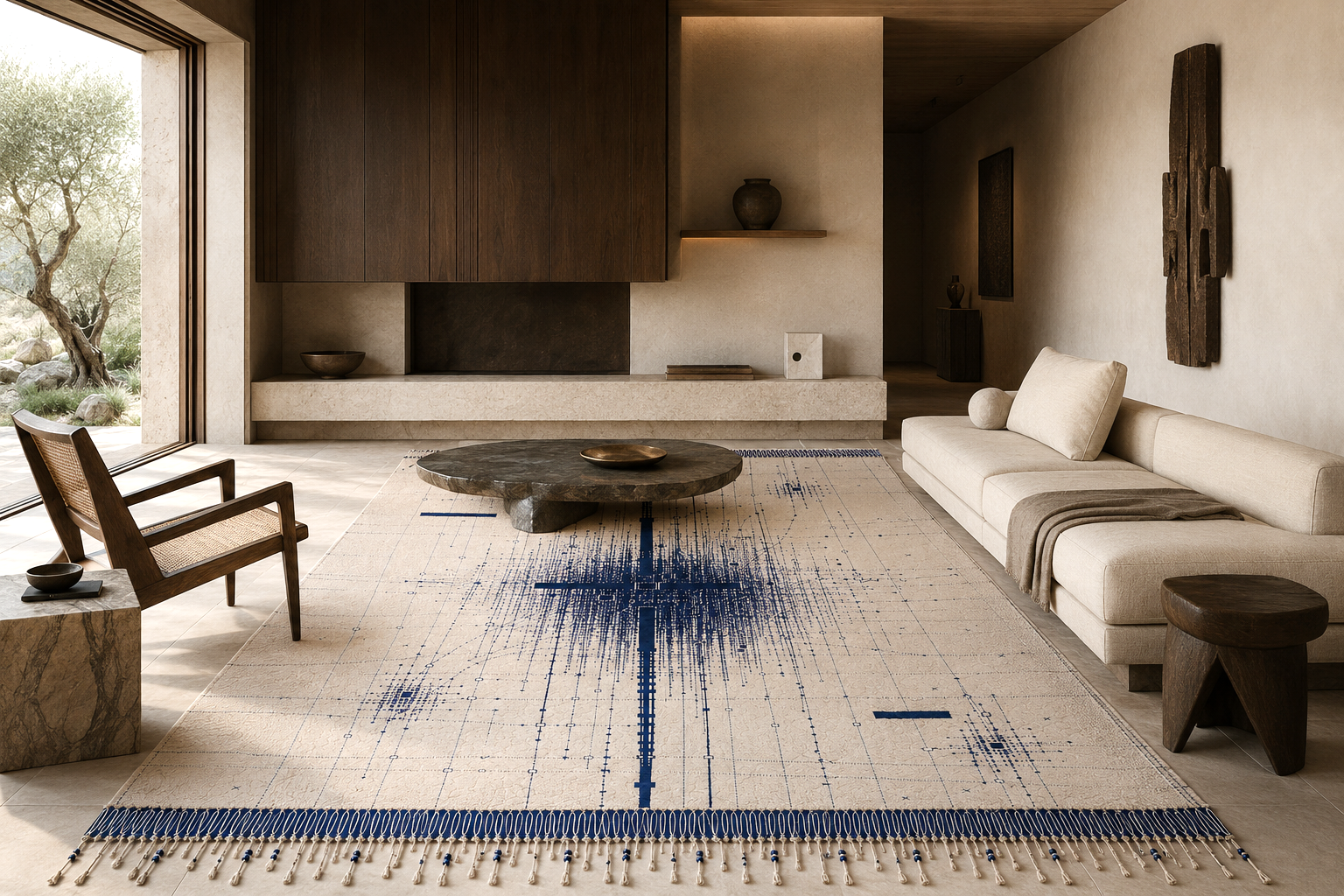
Blueprint Density, 2026, hand-knotted wool with mnemonic fringe, high-low pile, 9 × 12 ft.
That question surfaced during a conversation about Laurence Sterne's The Life and Opinions of Tristram Shandy, Gentleman. Sterne's novel is famous for refusing to move neatly from beginning to end. The narrative wanders, doubling back on itself until this digression becomes the story.
Sterne then does something unexpected. Rather than stating the obvious, he simply draws it. A single wandering line, his famous squiggle, turns around and becomes the narrative itself.
The line no longer illustrates an idea. It is the idea.
Architects understand this move instinctively.
A line is never just a line. It begins as a possibility. It hesitates. It changes direction. It is erased, redrawn, extended, interrupted, and occasionally abandoned altogether.
Some lines disappear forever. Others quietly survive long enough to become architecture.
Design rarely advances in straight lines. Neither do drawings.
Looking back at my “Woven Digressions” collection, I realized the rugs had never been trying to depict architecture. They were behaving like architectural drawings.
The lines wander. They accumulate. They interrupt one another. They disappear beneath other layers before resurfacing elsewhere. Geometry becomes less a system of order than a record of design in motion.
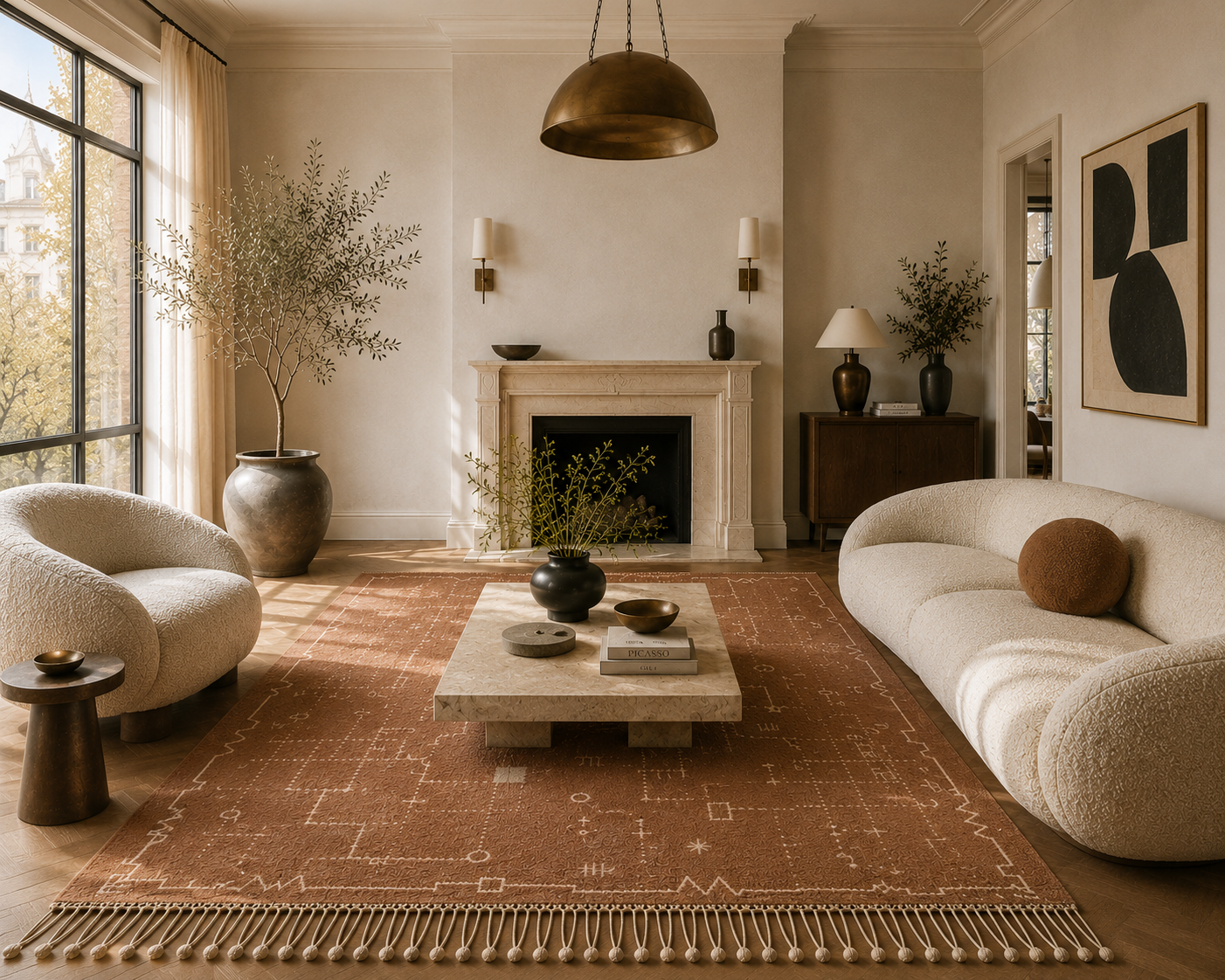
Field of Attempts, 2026, hand-knotted wool with mnemonic fringe, high-low pile, 9 × 12 ft.
Traditional carpets often ask to be read as pattern, motif, and symbol. These rugs ask something different. They ask whether narrative can emerge from movement itself. Whether a woven line can hesitate, return, overlap, or digress in much the same way a sentence can.
Perhaps that is why the collection feels strangely literary. Architects do not simply draw buildings. They draw possibilities.
Every drawing is a field of attempts. Every revision carries the memory of another decision beneath it. The final building often conceals that history, but the drawing never quite does.
It remains a record of thought moving toward form.
— Micah Heimlich
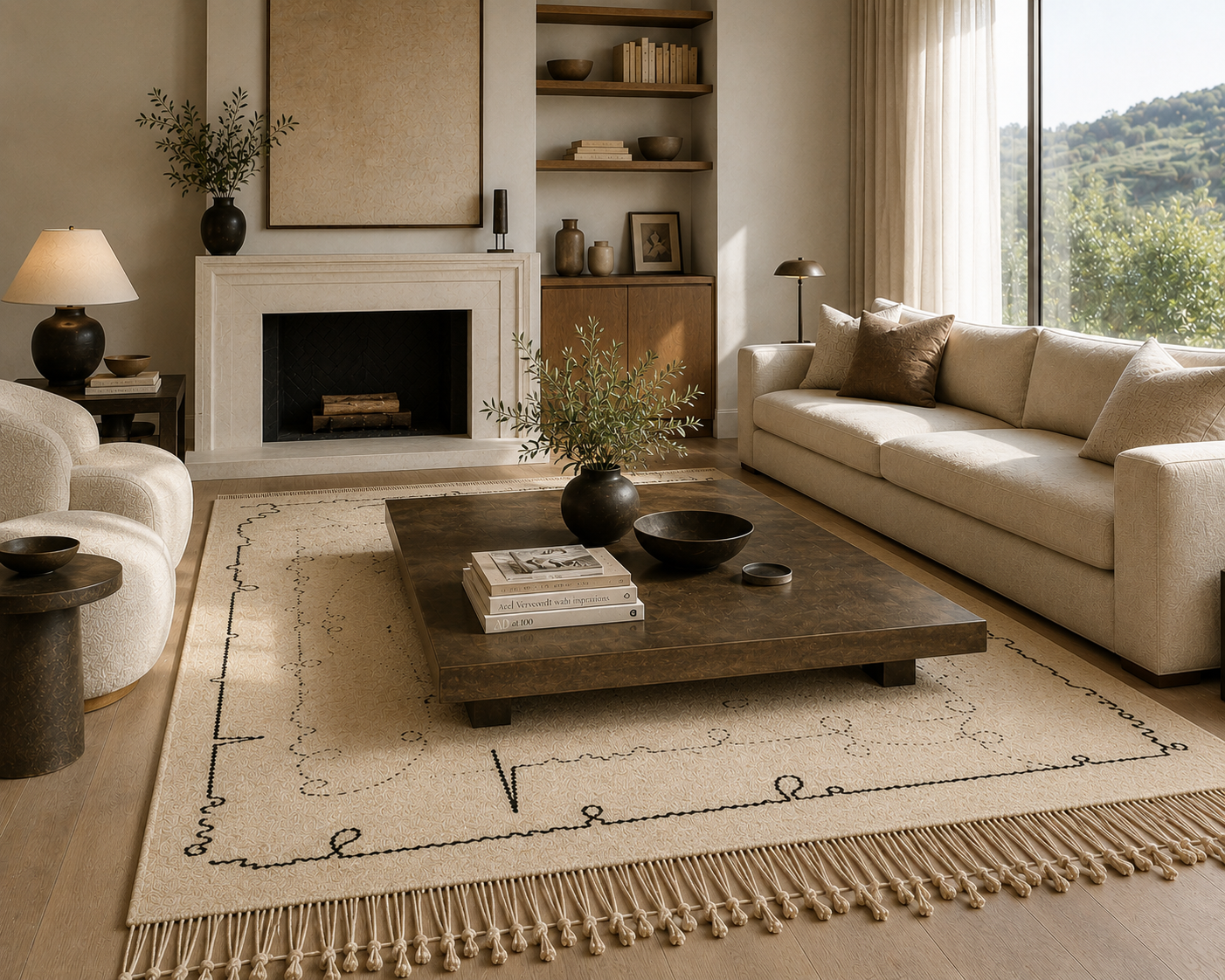
The Border Narrative, 2026, hand-knotted wool with mnemonic fringe, high-low pile, 9 × 12 ft.
