
RESIDE, RESTORE, RESORT
Architects spend a great deal of time developing prototypes for human structures. They create spatial environments from which architectural forms and functions gradually emerge. A church, a courthouse, a warehouse, or a school is recognizable long before one enters it. Architecture communicates the identity of a building through its organization, proportions, and spatial character.
This raises a different architectural question.
What does wellness in architecture look like?
At first glance, the answer appears obvious. Wellness seems to consist of familiar programs: a gym, a sauna, a meditation room, a cold plunge. Yet these are functions placed within architecture. They do not define the architecture itself.
The question is not how to design healthier rooms.
It is how to design a healthier house.
My design of “Mojave House” did not begin as an explicit investigation into wellness architecture. Rather, it sought to produce the best house possible. As the project developed, however, certain spatial ideas repeatedly emerged. A breathing room settled at the center of the plan. Gardens became integral parts of the house rather than landscapes surrounding it. Layers of covered outdoor spaces assumed an importance equal to that of the enclosed rooms.
These decisions did not arise from adherence to an architectural theory. They emerged from the internal logic of the project itself.
✺
Several years later, the question resurfaced.
HŌM encountered “Mojave House” and approached me to help develop a series of wellness homes. The project had been recognized as a wellness house, although it had never consciously been conceived as one.
Working alongside physicians, athletes, and researchers, the same question continued to arise. What had they recognized?
Returning to “Mojave House” revealed that the architecture itself had not changed. Only its interpretation had. In retrospect, the project had been answering a question long before it had been consciously articulated.
What does wellness in architecture look like?
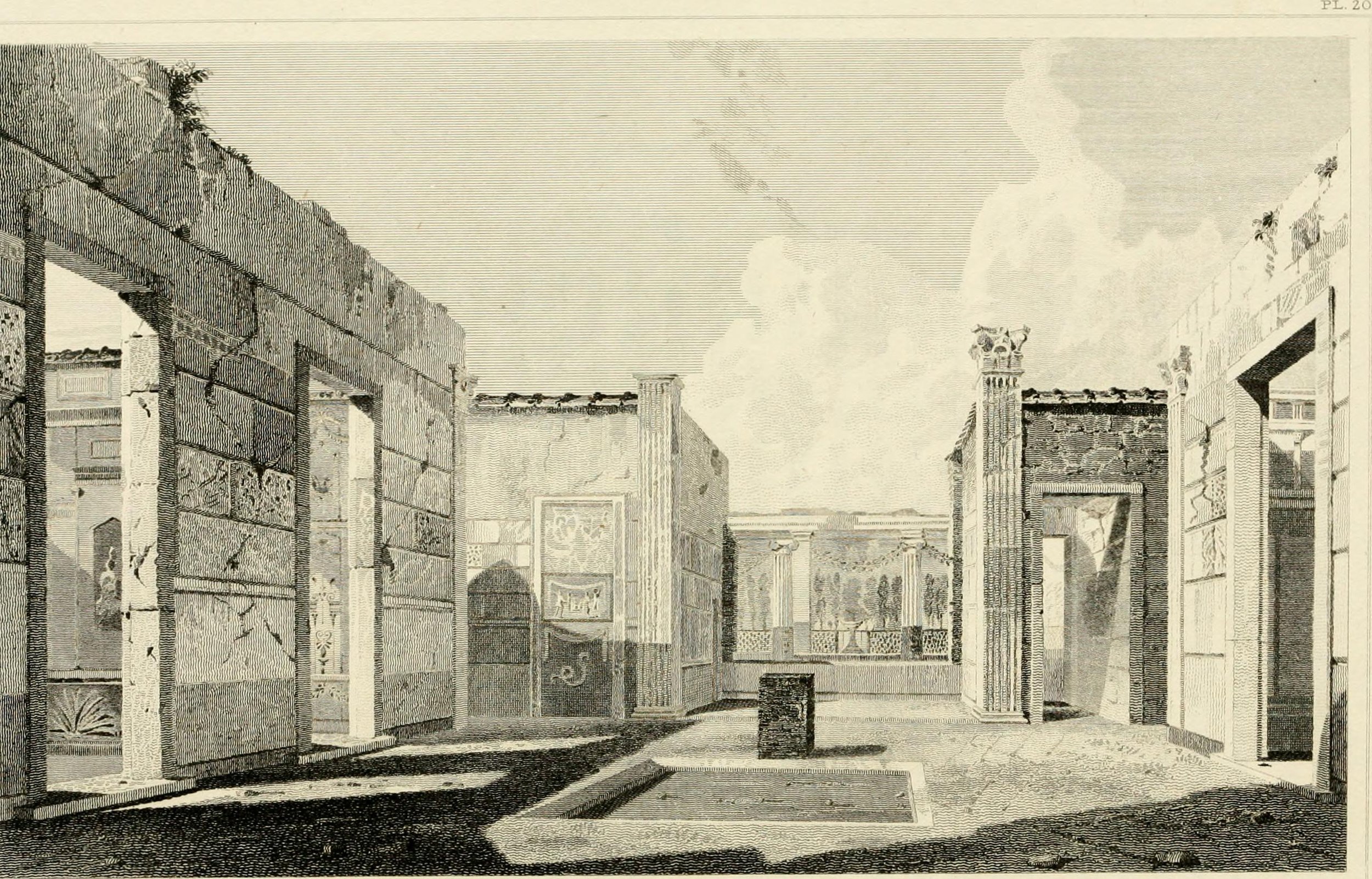
Wellness rooms had never served as the point of departure. Instead, those spaces emerged because the architecture had already begun organizing itself around restoration. Wellness had not been added to the house. It had become one of its organizing principles.
This inevitably suggested another question. Had other architects asked the same thing?
✺
The search was not for stylistic precedents or buildings to imitate, but for earlier attempts to address the same architectural problem.
The deeper the investigation went, the clearer it became that the subject was not individual buildings but enduring principles.
Architectural history began to resemble less a chronology of styles than an ongoing conversation about persistent ideas.
That conversation extended backward through Roman healing complexes, monastic cloisters, Islamic gardens, Japanese inns, European spa towns, and ultimately the modern resort. These traditions emerged in different cultures, climates, and centuries, yet they repeatedly arrived at remarkably similar architectural responses whenever restoration became the central ambition.
The significance of this convergence was unexpected. The search had not uncovered a new architectural language. It had rediscovered an existing one.
✺
This realization also reframed the meaning of the resort.
Like the church or the courthouse, the resort has acquired a recognizable architectural identity. Yet its significance lies less in its visual appearance than in what it represents.
Resorts did not invent wellness. They became custodians of an architectural language that long preceded the resort itself.
Across centuries they inherited and refined architectural ideas that had repeatedly emerged wherever restoration served as the organizing ambition. Unlike many other building types, they never abandoned restoration as one of their central architectural purposes.
Visitors frequently leave a resort expressing the same thought: "I wish I could live here."
This response is often attributed to luxury. A more compelling explanation is that it reflects an intuitive recognition of what it feels like when restoration becomes one of the organizing principles of architecture.
That continuity is significant.
It explains why familiar architectural strategies continue to reappear whenever restoration becomes the goal. They were never merely stylistic choices. They were architectural responses to a shared human ambition.
This perspective gives rise to the idea of Residence as Resort—not because houses should imitate resorts, but because the resort represents one of the longest continuous explorations of restorative architecture.
The question is therefore no longer whether society should build resorts. It is whether restoration deserves to become one of the organizing principles of the contemporary home.
✺
Every generation inherits an architectural conversation. Some ideas disappear. Others endure because they continue to answer fundamental human needs. Restoration appears to be one of those enduring ideas.
Residence as Resort seeks to continue that conversation by exploring how an architectural language refined over centuries might evolve through the contemporary home.
It represents one possible point of entry into an architectural tradition whose central concern has always been restoration.
— Micah Heimlich
