
THE DIRT UNDER THE CARPET
Before an existing building can be altered, it must first be understood.
On one renovation project, an existing concrete structure needed to be drilled through. Before any work could begin, the slab was scanned to locate reinforcing steel, utilities, and post-tensioning cables concealed beneath its surface. The scans were produced to answer a practical question:
Where is it safe to drill? What are the walls made of? How is the floor built?
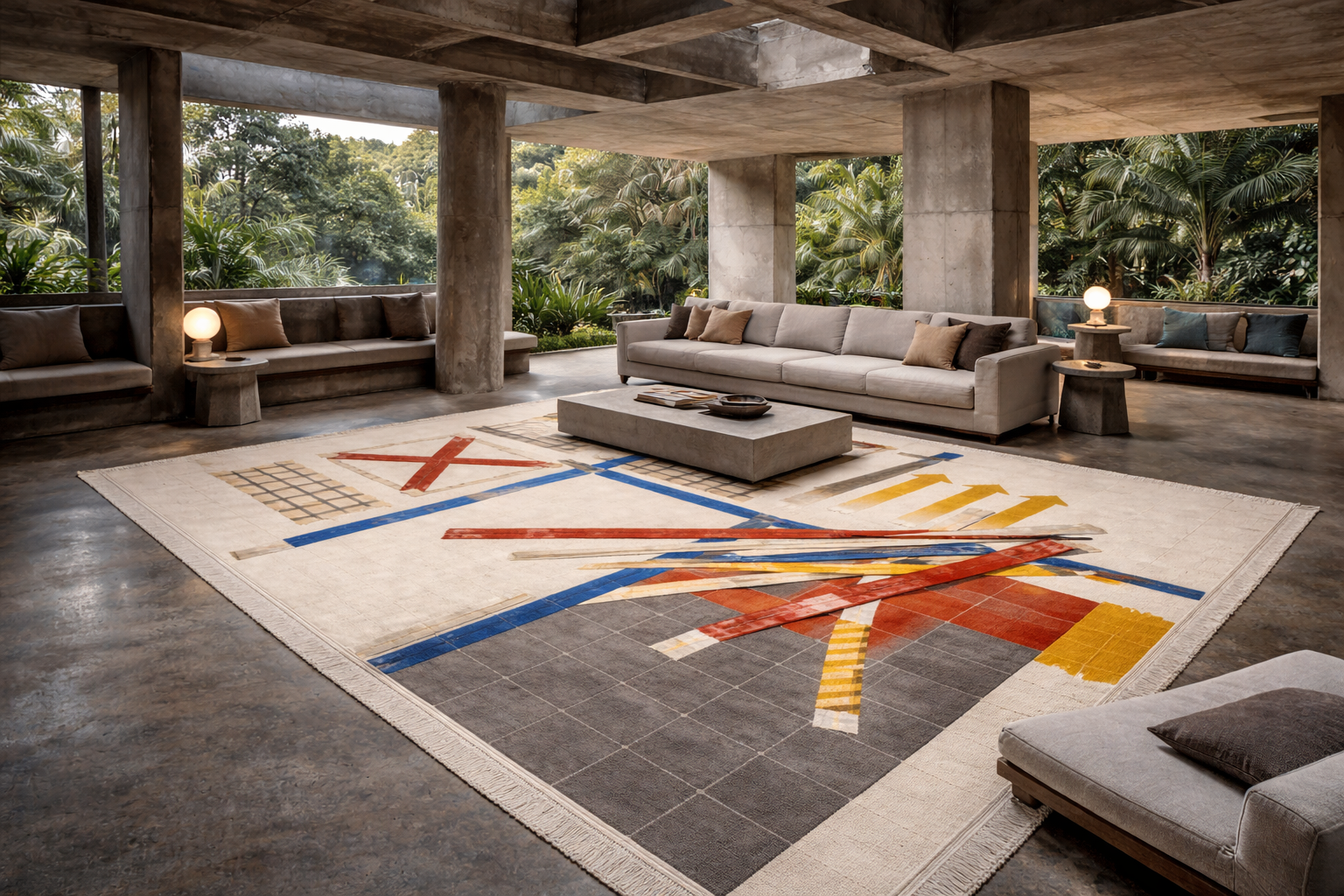
COVER: Counterflow Field, 2026, hand-tufted New Zealand wool and silk, 108 × 144 inches
ABOVE: Registration Error, 2026, hand-tufted New Zealand wool and silk, 108 × 144 inches
Once that question had been answered, the work could proceed. Yet I found myself returning to these images.
An X-ray does something unusual. It allows us to look through architecture rather than simply at it. The finished building presents only one reading of itself. The scan presents yet another.
Structure overlaps utilities. Old repairs intersect new work. Independent systems occupy the same space, each responding to its own set of requirements.
I then began enlarging the scans, isolating fragments, and studying them in a way that had nothing to do with construction. They were never intended as drawings, yet they possessed an unexpected graphic richness.
Tape crossed survey markings. Reinforcing bars intersected with plumbing. Utility lines collided with structural grids. Practical information accumulated into compositions that no one had set out to design.
That curiosity became the beginning of this collection.
Each rug is derived from construction scans, field markings, X-ray imagery, and the temporary graphics produced during renovation. Rather than inventing abstract compositions, the designs isolate fragments that already exist within the building itself ...
For centuries, carpets have represented gardens, landscapes, ornament, geometry, and the human narrative. Their imagery has traditionally been applied to architecture as decoration.
These rugs attempt something different. They do not depict architecture. They emerge from it.
The rug belongs to architecture, not decoration.
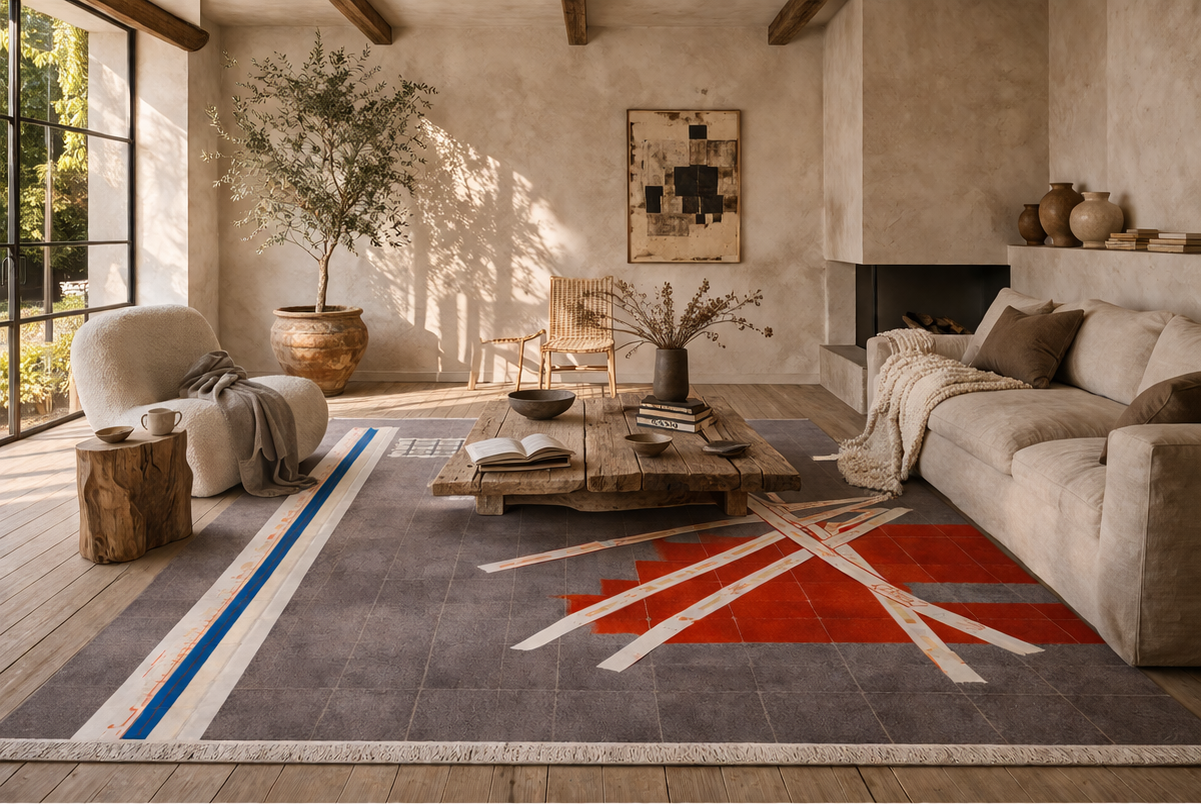
Displaced Field, 2026, hand-tufted New Zealand wool and silk, 108 × 144 inches
These rugs preserve that briefest of moments when a building can be read from the inside out. They are neither reproductions of construction drawings nor conventional abstractions. They are artifacts of a process that is almost never seen, translating evidence gathered on site into objects intended for everyday life.
Architecture is far more complex than the calm surfaces it presents to us.
These rugs invite us to look through those surfaces—not to solve their complexity, but simply to witness their passage.
To see the building before it disappears behind its own finish.
—Micah Heimlich
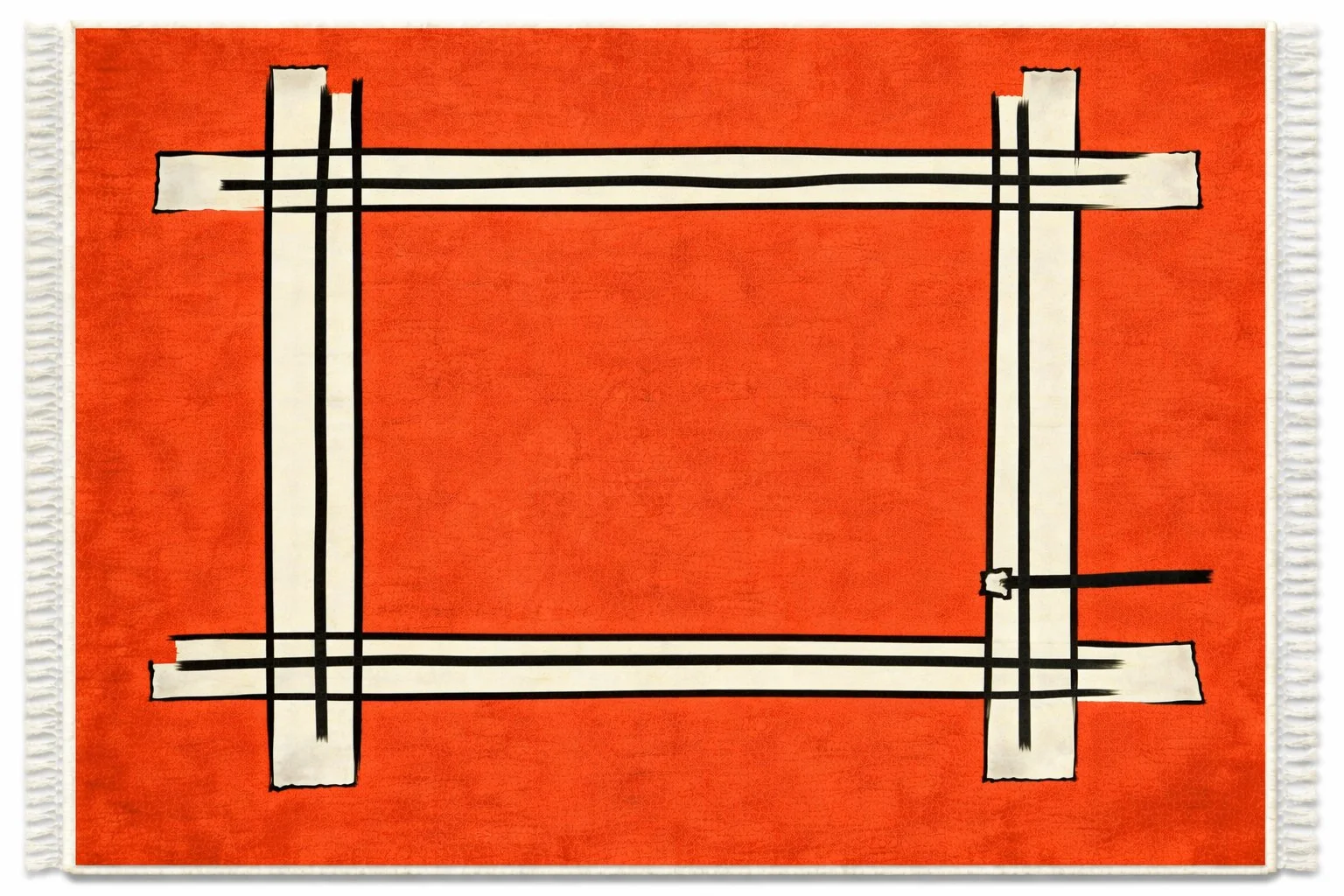
Red Wall, 2026, hand-tufted New Zealand wool and silk, 108 × 144 inches
