
WELLNESS IS NOT A ROOM
Modern architecture did not begin as a style. It began as a response to the pressures of the environment.
Long before glass towers became symbols of progress, architects were designing against the plague, overcrowding, poor sanitation, and polluted industrial cities. Sunlight, in turn, became medicine. Fresh air a design strategy. Roof terraces, generous glazing, white walls, and the open plans were not simply aesthetic decisions; they were attempts to improve human health.
Architecture, in other words, is well-being.
Over time, the architecture endured while much of its original purpose quietly faded from the record. We observed the form yet gradually lost the reason.
The language survived. The thought did not.
What began as an architecture of respite slowly became an architecture of style.
Today, interest in wellness has returned to architecture.
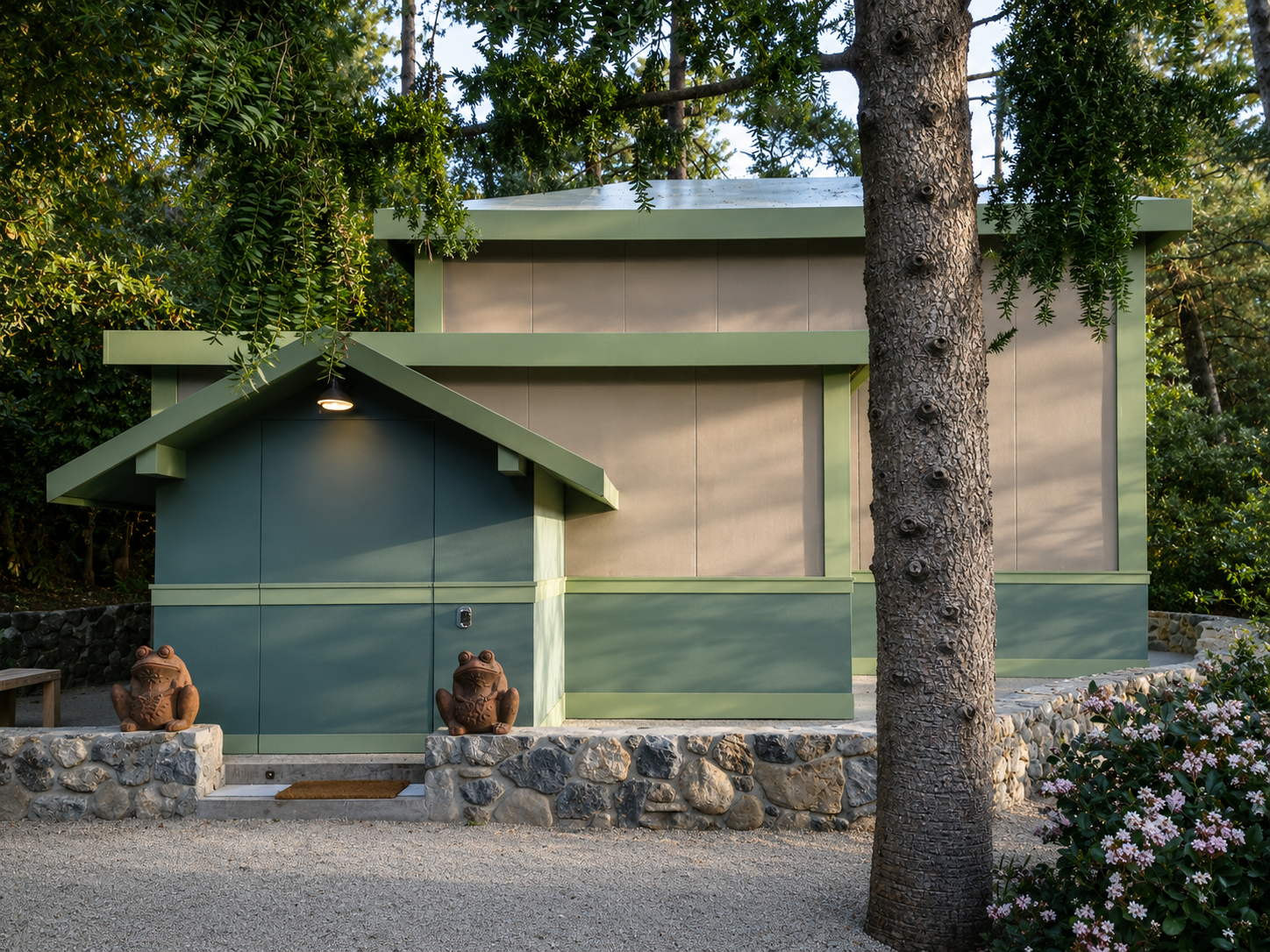
Mulholland Gymnasium. Designed as a dedicated wellness pavilion where architecture, daylight, and landscape support the rituals of everyday well-being.
We recognize that our homes shape our bodies, our minds, and our daily lives. Yet rather than reconsidering the architecture itself, we often respond by adding specialized spaces: a gym, an infrared sauna, a meditation room, a cold plunge, a yoga studio. These are all worthwhile additions—I have designed many of them myself—but none of them, by themselves, make a healthy home.
The question is not where wellness happens.
The question is:
How can the entire house participate in wellness?
Wellness is not confined to a single destination within a house. It is shaped by the quality of light that marks the beginning of the day, the air that moves through each room, the materials that surround the body, the sequence of arrival, entry, and departure—the opportunities for movement, and the rituals architecture implicitly enacts over time.
These are not amenities added to a building. They are architecture itself.
That realization did not come all at once.
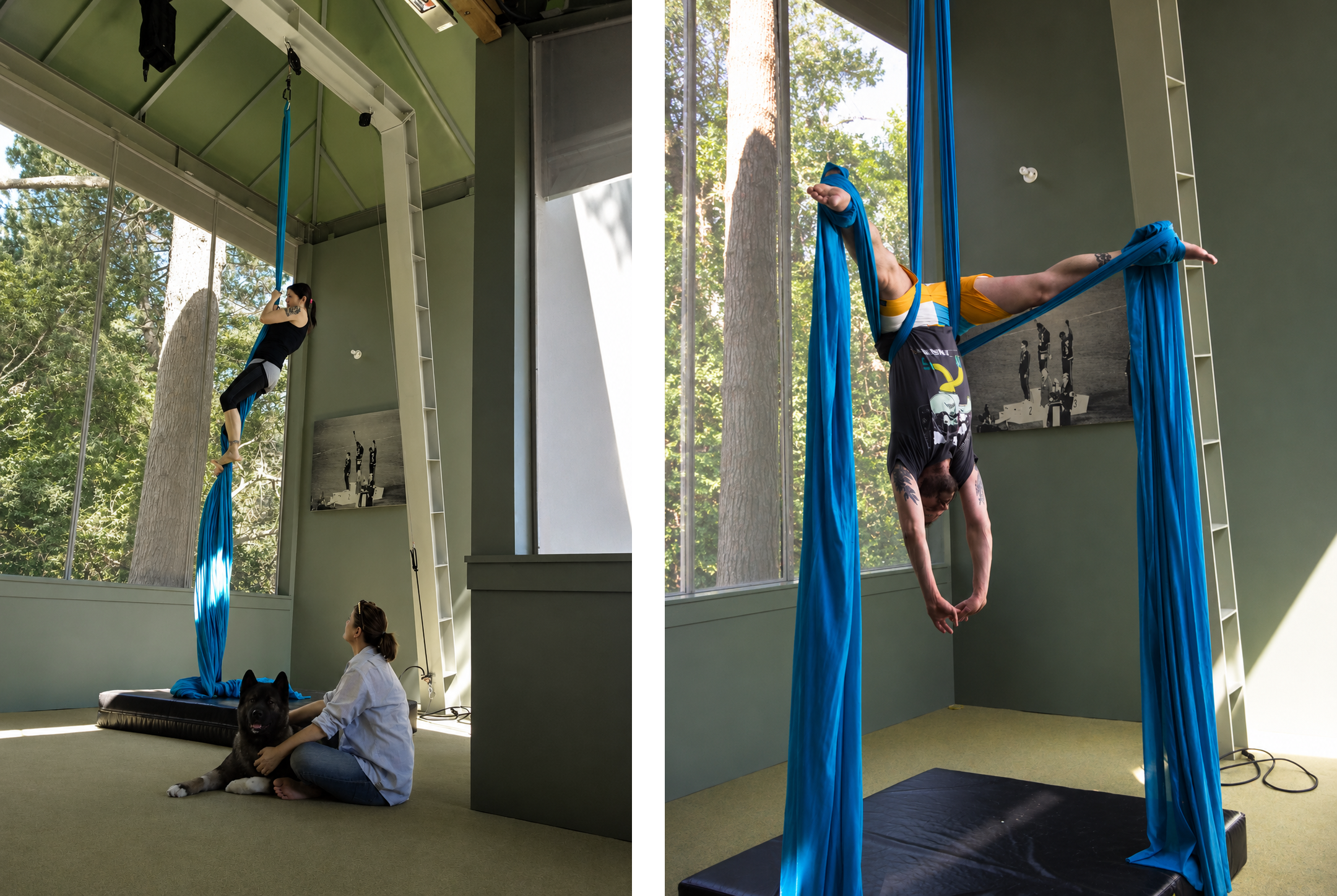
The question is not where wellness happens. The question is how architecture can encourage it.
For many years now, my work has focused on designing bespoke wellness environments for private residences: movement studios, strength-training spaces, barre rooms, and recovery suites. These became opportunities to explore how architecture could support healthier living. Rather than asking where wellness should occur inside a home, I realized that the home itself should become restorative.
That question led to Mojave House.
During its design, wellness ceased to be a program and became an architectural principle. The breathing room occupied both the physical and symbolic center of the house. A wellness court extended those ideas into the landscape. Spaces for movement were no longer hidden in a basement or behind a garage door but became visible from the public areas of the home—not as spectacle, but as an acknowledgment that health belongs at the center of domestic life rather than at its margins.
It was during this project that I recognized an architectural archetype that had been implicitly solving this problem for decades.
The resort.
Not because it is luxurious.
Because it is restorative.
People return from resorts around the world saying the same thing:
I wish I could live here.
Rarely are they talking about infinity pools or room service. They are responding to something much deeper. Resort architecture is carefully choreographed around restoration. Arrival slows the body. Gardens invite wandering. Light becomes part of the daily experience. Water cools the air. Privacy and community exist in careful balance. The architecture itself participates in making people feel comfortable in themselves.
Why should those conditions exist only during vacation?
The phrase “Residence as Resort” became a way of describing that realization. It was not an attempt to import luxury into the home, but an acknowledgment that the conditions that support restoration had been established decades ago with Alvar Aalto’s Paimio Sanatorium. Mojave House became my first opportunity to translate those principles into everyday domestic life. Later collaborations, including HŌM, allowed those ideas to be explored beyond a single bespoke residence and toward a broader model of housing.
Many aspects of wellness can now be measured. Indoor air quality, daylight exposure, acoustics, thermal comfort, water quality, and material toxicity all have measurable effects on human and animal health. Today we understand far more about how buildings influence the body than the architects of the early twentieth century ever could.
And yet, in many ways, our homes have become less healthy.
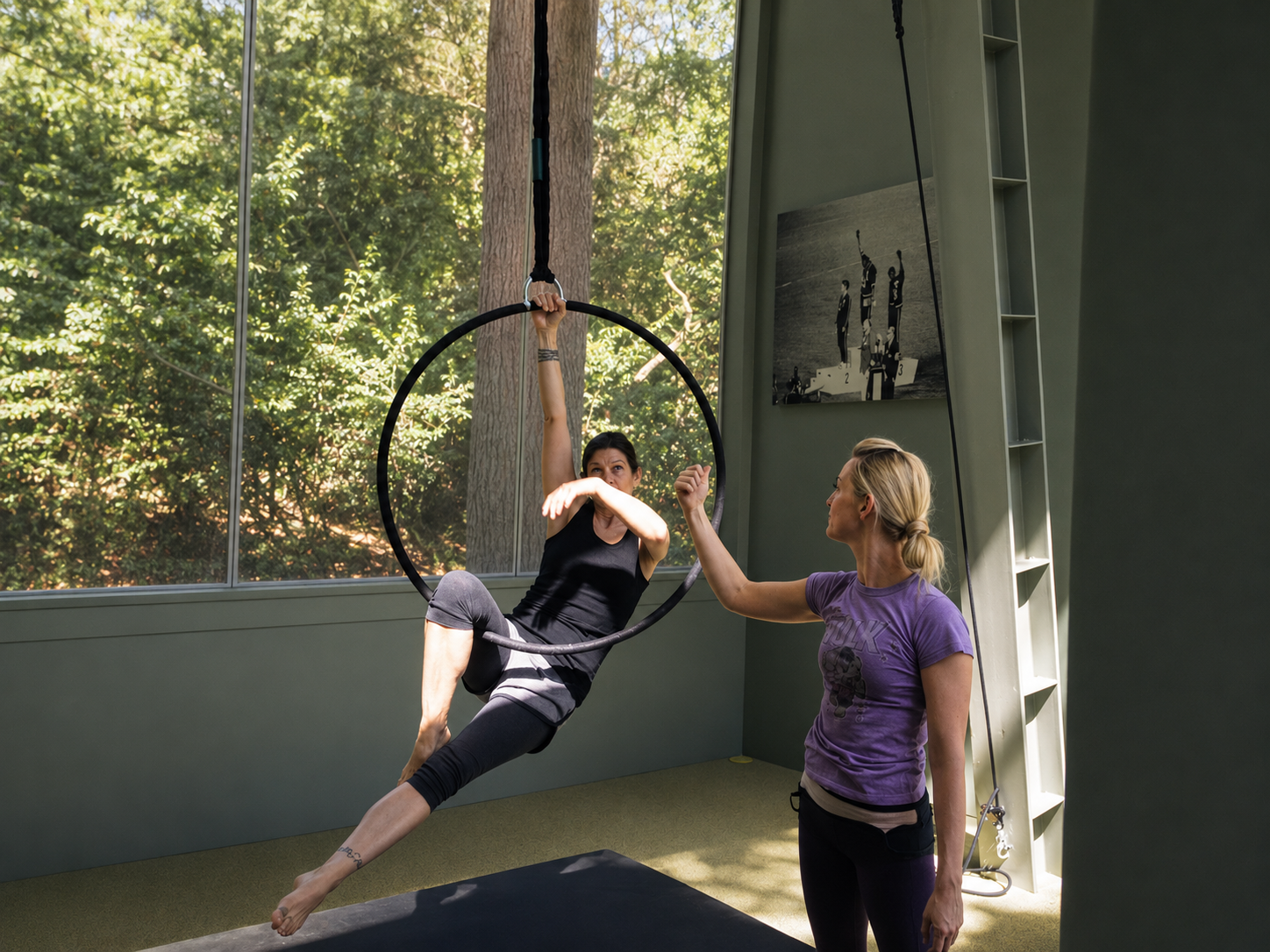
Architecture quietly supports the rituals that support us.
We carefully regulate the efficiency of our buildings while filling them with synthetic fragrances, harsh cleaning products, unnecessary chemical treatments, and materials that surreptitiously degrade the air we breathe and disrupt our biology. We specify countertops to the millimeter while giving remarkably little thought to the pollutants of everyday life.
My own severe allergic reaction to such pollutants transformed this realization from an academic interest into a personal one. Products most people consider household became life-threatening. Air fresheners, synthetic fragrances, and the residue from gas appliances forced me to confront a simple truth:
Architecture is a lifesaver.
Every specification, every finish, every appliance, and every product introduced into a home becomes part of the environment to which we entrust the security of our bodies.
Architecture cannot guarantee health. It can, however, create the conditions in which health is more likely to flourish.
It can encourage movement rather than discourage it. It can privilege filtered daylight over glare, fresh air over fragrance, natural materials over chemicals, and human ritual over routine. It can support restoration as part of everyday life rather than reserving it for weekends or vacations.
Architecture does not need another style. It needs to recover one of its oldest purposes.
A house should be a fortress of peace.
—Micah Heimlich
Further reading:
• Alvar Aalto — Paimio Sanatorium https://en.wikipedia.org/wiki/Paimio_Sanatorium
• Beatriz Colomina — X-Ray Architecture https://www.lars-mueller-publishers.com/x-ray-architecture?srsltid=AfmBOoqoArCy6Tms68L4z0sMg-0vdkOdQ5_0XXkm17kkgZuK2jtKlqCO
• Grace Esslinger — The Architecture of Wellness (University of Texas Thesis) https://repositories.lib.utexas.edu/server/api/core/bitstreams/4cbf56a0-884c-4631-86b7-b152191e3f04/content
