
THE GARBAGE TAKEN OUT BY THE ARCHITECTS, EVEN
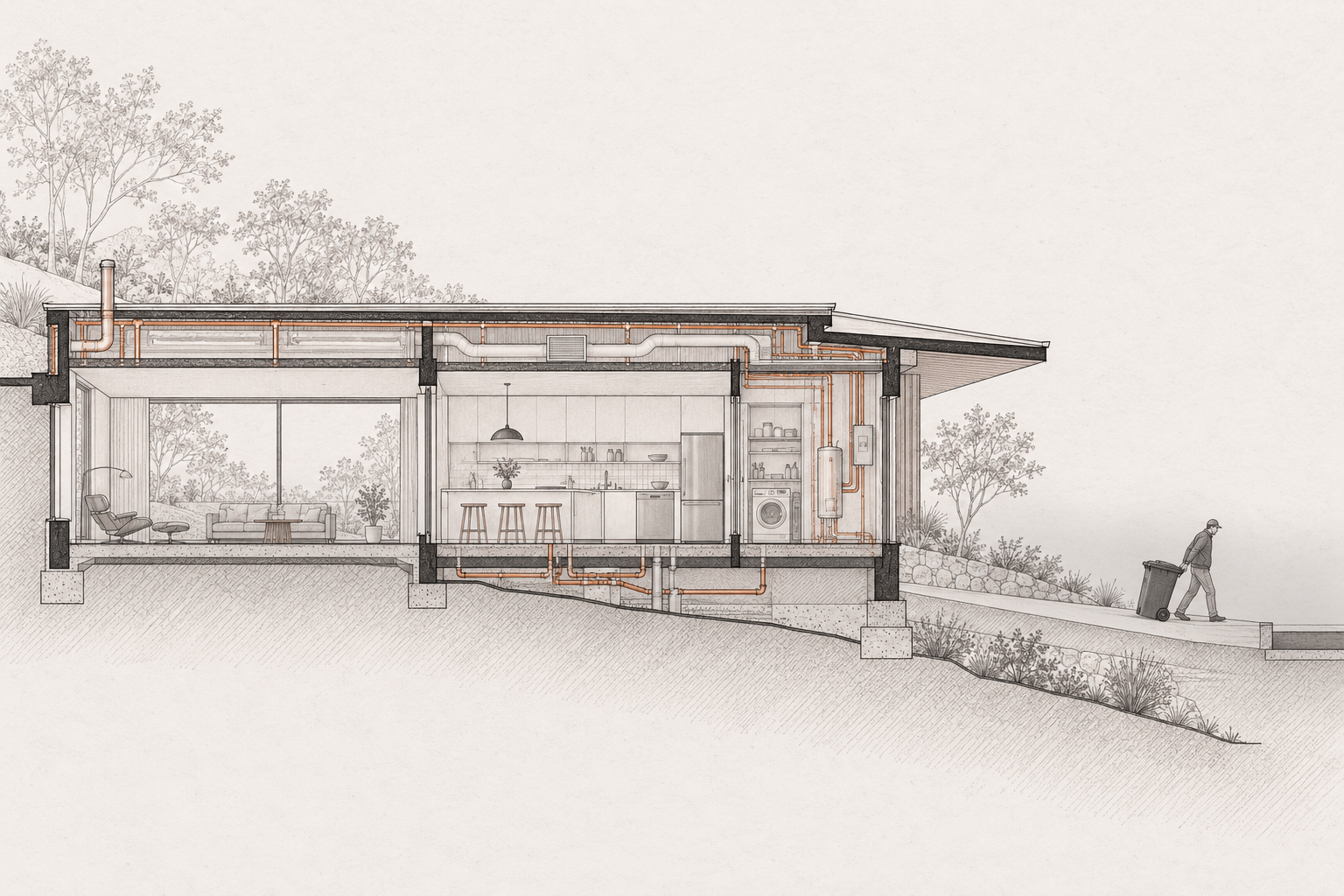
And yet the trash still has to get to the curb. An overfull bin, with two tottery wheels, and a perilously sloping driveway. For years, the trip is almost second nature. Then a shoulder gives out, one’s balance falters, or the load becomes too much to bear. The distance has not changed. Neither has the routine.
The kitchen has been planned down to the drawer dividers. The bins have somewhere discreet to stand. Getting them to the street usually remains someone else’s problem. However, that ubiquitous trudge belongs in the architectural brief.
In 1923, Le Corbusier called the house “a machine for living in,” looking to ships, aircraft, and automobiles as prescient models for how to rethink the design of houses. Health shaped the experiment, too. In X-Ray Architecture, Beatriz Colomina argues that tuberculosis and diagnostic imaging helped drive modern architecture’s pursuit of sunlight, air, and transparency.
Much of that ambition has become accepted. Structural frames open walls to glass panels and panoramic views. Heating and ventilation temper the rooms; machines preserve food, cook it, and wash the dishes. Hot water arrives; a handy switch extends the evening. We only notice the machinery when it fails. Meanwhile, someone checks supplies, books servicing, and wonders what that clanking noise is.
An ultra-responsive home, however, would take on more of this kind of work, bringing architecture, equipment, and digital systems together. AI (excuse me—SI) could help it respond to existential habits and changing circumstances rather than obey a set timetable. A refrigerator tracking its contents could notice the dwindling milk and, with permission, add it to the next Door Dash delivery. One less errand perhaps. A reminder merely leaves the errand to us.
The rooms could be ready before their occupant arrives, temperature and shading duly adjusted. Someone feeling unwell could settle into bed while the house softened the light. With suitable sensors and agreed settings, it could flag an elevated body temperature and adjust the room or bed for comfort. Rest would involve fewer instructions.
From the pillow, a courtyard garden remains in view. Rooms shallow enough to admit daylight bring it to the breakfast table; glazing and exterior shading temper glare and heat. These pleasures belong wherever people would wish to spend their days.
Behind the walls, wiring needs conduits, and equipment needs room for servicing and discreet replacement. Tomorrow’s systems cannot be sealed behind yesterday’s finished walls. Bathrooms need advance backing for grab bars. Hallways should accommodate walking aids, and a downstairs room should be able to serve as a bedroom. Years later, such foresight may allow someone to remain in the home where they have lived all their life.
Architects have put a century of invention into the house-machine. It can wash the dishes, stream a film, and answer when called. Yet its occupant largely remains the caretaker, inventory clerk, and refuse collector. The next architectural revolution might begin with a change of staff: the house gets to take out the trash.
A machine for living in should have less need of us to keep it running.
—Micah Heimlich
