BEFORE THE DOOR
Many contemporary buildings begin at the front door. The best begin with the threshold—an experience that starts long before the door and continues long after it.
On a plan, a threshold appears as an invisible line: the boundary between in and out, public and private, one room and the next. In experience, however, it has depth and duration. It is less a mark than a manifestation—a state of heightened awareness between one station and another.
Architecture is the art of choreographing these transitions.
Such choreography need not be linear. It can delay, suspend, conceal, or redirect. A path may point to its destination and then disappear. A porch may be "occupied" without any intention of entering it. A courtyard encountered by chance along the way may become the place one chooses to remain.
The measure of a transition is not its length, but the degree of change.
Crossing a threshold invites both the promise of a new future and the challenge of leaving the known behind. In architecture, this tension is at once physical and symbolic. The building allows one atmosphere to loosen its hold before another takes over.
At Pacific Retreat, this idea acquires massed proportions.
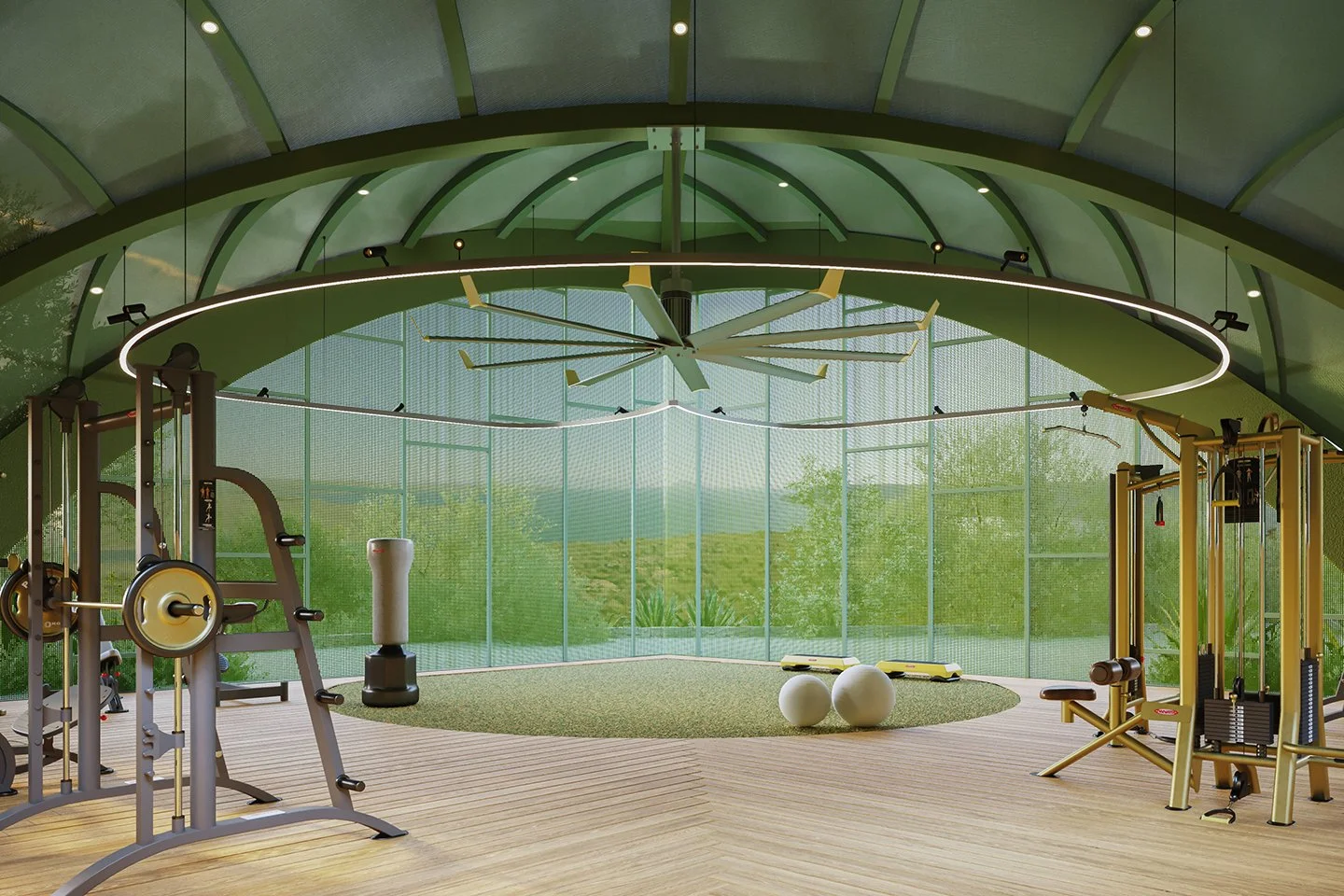
A 400-square-foot ADU is situated beneath an 800-square-foot canopy, conceived as an indoor-outdoor gym. The usual hierarchy is reversed: the enclosed building provides the necessities, while twice as much space is devoted to what might be called the front porch.
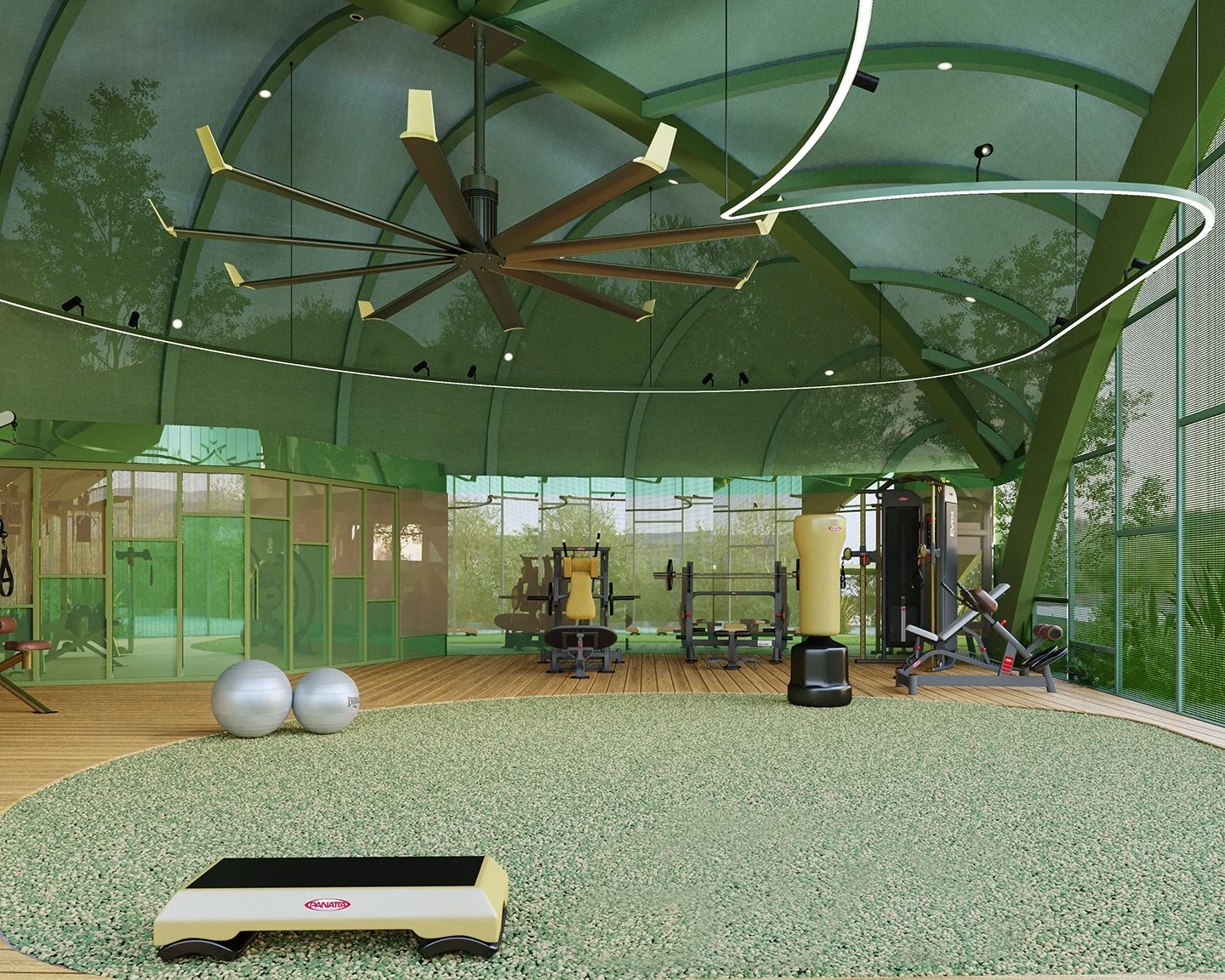
Beneath a tensile membrane and behind a porous screen, the porch is sheltered without being sealed. Light and air remain present; the landscape is filtered but never excluded.
But the porch is not a prelude to the architecture. The porch is the architecture. Transition occupies twice the space of an enclosure.
When the space between destinations is treated merely as circulation, transition is reduced to movement. The route may function perfectly and still fail to prepare anyone for arrival. Circulation is how one gets from one place to another. Transition considers what must change along the way.
Nor is arrival its only work. A meaningful threshold operates in both directions, but it never carries the same meaning twice.
On entering, it is charged with anticipation; on leaving, with memory. The porch that gathered the visitor from the world now becomes the setting for a final parting glance, a lingering conversation, a goodbye.
A building can release as carefully as it receives. The work is not only spatial. It is attentional.
Mindfulness is often regarded as a sense of stillness cultivated through meditation. Yet its deeper practice is attention to change: a breath entering and leaving, a sound appearing and receding, a sensation growing from nothing.
A well-designed threshold gives this awareness physical form. It asks for a pause; it allows one state of mind to recede, and prepares another to advance. It reveals that arriving is not an event, but a process.
Perhaps architecture has been teaching mindfulness all along.
--Micah Heimlich